What Is a Brand Identity … And What Does It Actually Include?
Most women in business think they have a brand. What they actually have is a logo. Here’s the difference, and everything a complete brand identity should include.
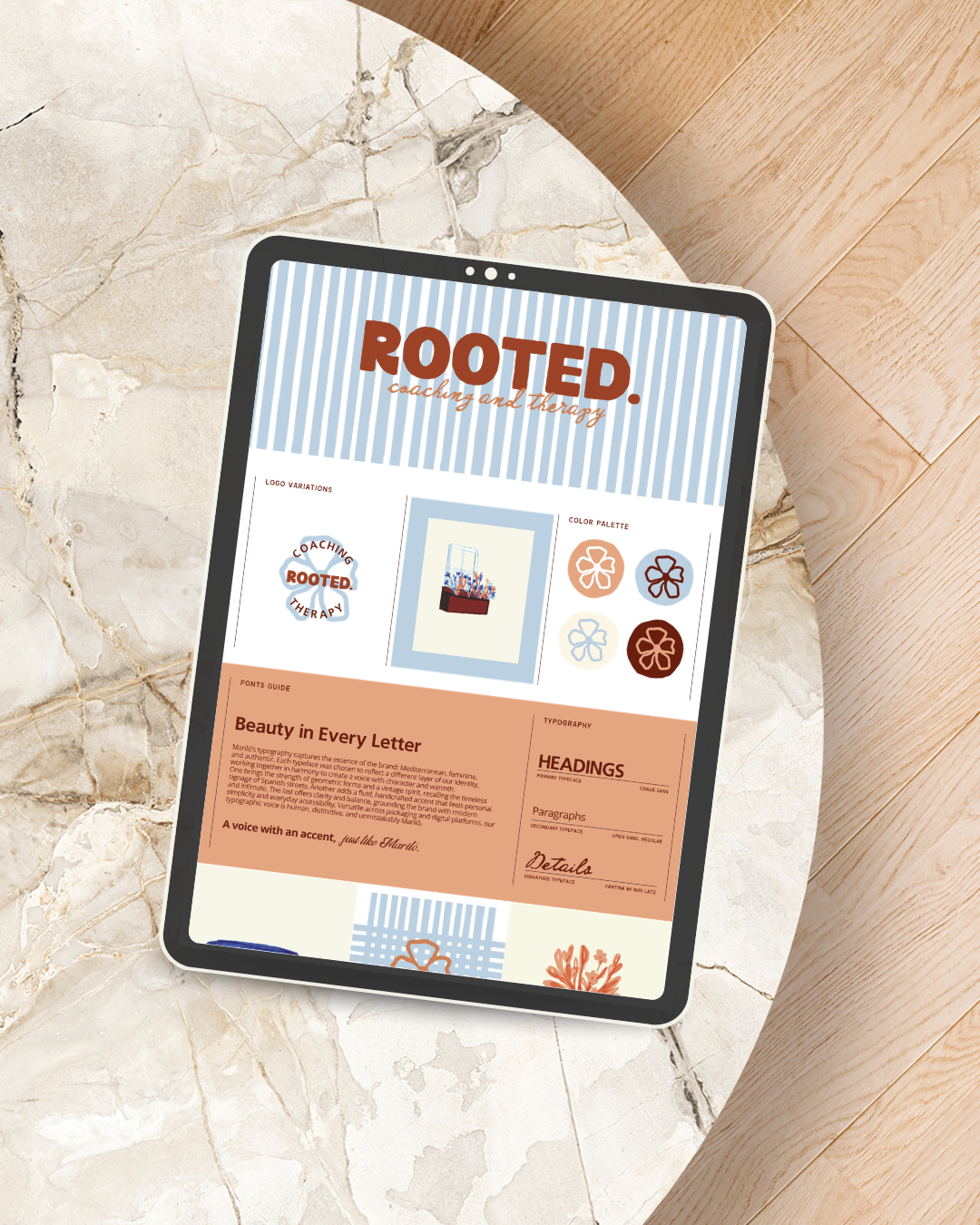
What Is a Brand Identity — And What Does It Actually Include?
A brand identity is the complete visual and verbal system that tells the world who your business is, what it stands for, and what it feels like to work with you. It is not your logo. Your logo is one piece of a much larger system, and building a business on a logo alone is like trying to tell a story with one word.
If you’ve ever wondered why your business doesn’t look as polished as others in your space, or why your Canva posts never quite feel like “you”, the answer is almost always the same. You have a logo. You don’t yet have a brand identity.
This guide breaks down exactly what a brand identity is, what it includes, and why it matters so much more than most small business owners realize. By the end, you’ll know precisely what a complete brand identity system looks like — and whether yours is actually finished.
Want to learn how to build a brand identity from scratch? Sign up for Brand Camp! Vienna’s free 6-week email course for women in business. viennabranding.com/brandcamp
The definition: what is a brand identity?
Brand identity: the complete system of visual and verbal elements that represent a business consistently across every touchpoint, from the logo and color palette to the typography, voice, and the way the brand shows up across all marketing materials.
A brand identity is different from a brand, which is the emotional perception people have of your business, the gut feeling someone gets when they see your name. Your brand identity is the tool you use to shape that perception. It’s the tangible system that creates the intangible feeling.
Think of it this way. Starbucks’ brand is “the third place”, a sense of comfort, community, warmth. Their brand identity is the green siren logo, the specific shade of forest green, the handwritten cups, the consistent typography. One is a feeling. The other is a system that produces that feeling at scale.
Logo vs. brand identity: what’s the difference?
This is the most common point of confusion for small business owners, and it’s worth getting completely clear on before anything else.
Your logo is a symbol. It’s a mark that represents your business visually. A great logo is memorable, versatile, and works at any size. But a logo alone cannot tell someone what your business sounds like, how it photographs, what colors it uses in a presentation, or how the packaging should feel.
Your brand identity is the complete system your logo lives inside. It gives your logo context, rules for how it’s used, and all the other visual and verbal tools that make your business recognizable across every surface.
Here’s a practical way to understand the difference:
A logo is your business’s signature.
A brand identity is your business’s entire handwriting, how it looks, sounds, and feels everywhere
Most DIY branding stops at the logo. That’s why most DIY brands feel inconsistent, there are no rules governing what happens beyond just the one mark.
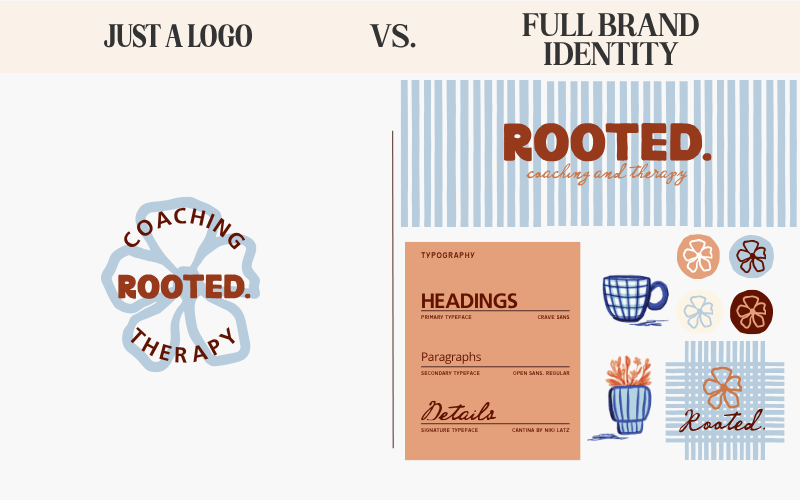
What a complete brand identity includes: the 8 elements
At Vienna Branding + Design, every brand identity we build, custom or through our Capsule Brand collection, includes all eight of these elements. Together, they create a system that’s coherent, versatile, and actually usable in the real world.
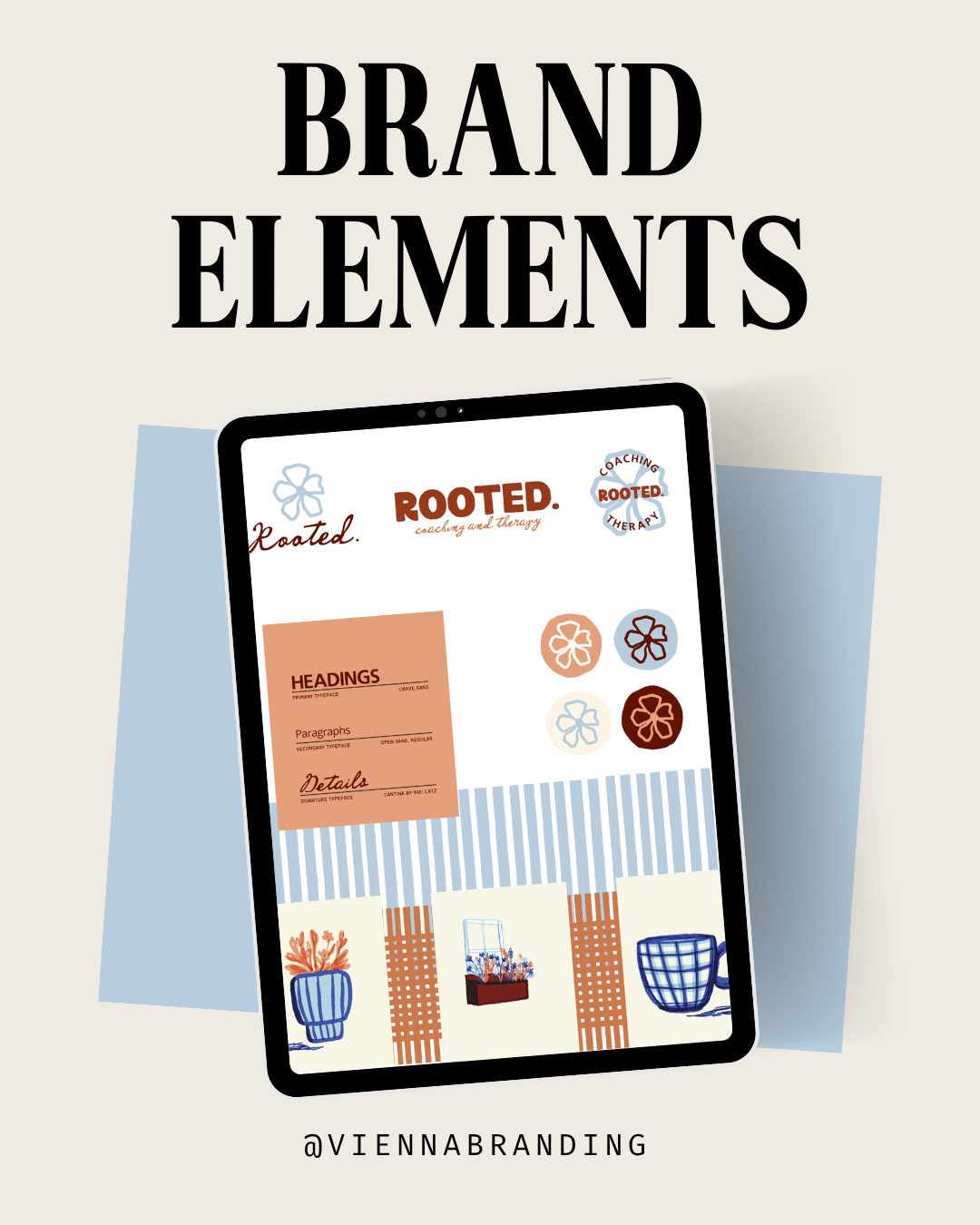
1. Primary logo
The main mark of your business, the version you use most often, on your website header, email signature, and primary marketing materials. A strong primary logo works at large sizes (a billboard or storefront) and small sizes (a business card or app icon) without losing legibility.
A complete brand identity includes the primary logo in multiple file formats: PNG for digital use, SVG for web and scalable applications, PDF and EPS for print. It should also include color, black, and white versions so you always have the right variant for the right background.
2. Secondary logo
Most logos have a primary orientation, stacked, horizontal, or a combination. The secondary logo is the alternative lockup for situations where the primary doesn’t fit. If your primary is stacked, your secondary might be horizontal. If your primary is horizontal, your secondary might be a condensed vertical stack.
Without a secondary logo, you’ll find yourself awkwardly squeezing your primary into spaces it wasn’t designed for, which is how brands start to look inconsistent.
3. Submarks and brand marks
Submarks are simplified logo variations, a monogram, an icon, an initial, or a standalone symbol, used in places where the full logo is too complex or too large. Common applications include social media profile photos, favicon (the tiny icon in a browser tab), stamps, embossing, embroidery, and watermarks on photography.
A brand mark suite typically includes two to three submark variations, all of which feel unmistakably like the same brand as the primary logo.
4. Color palette
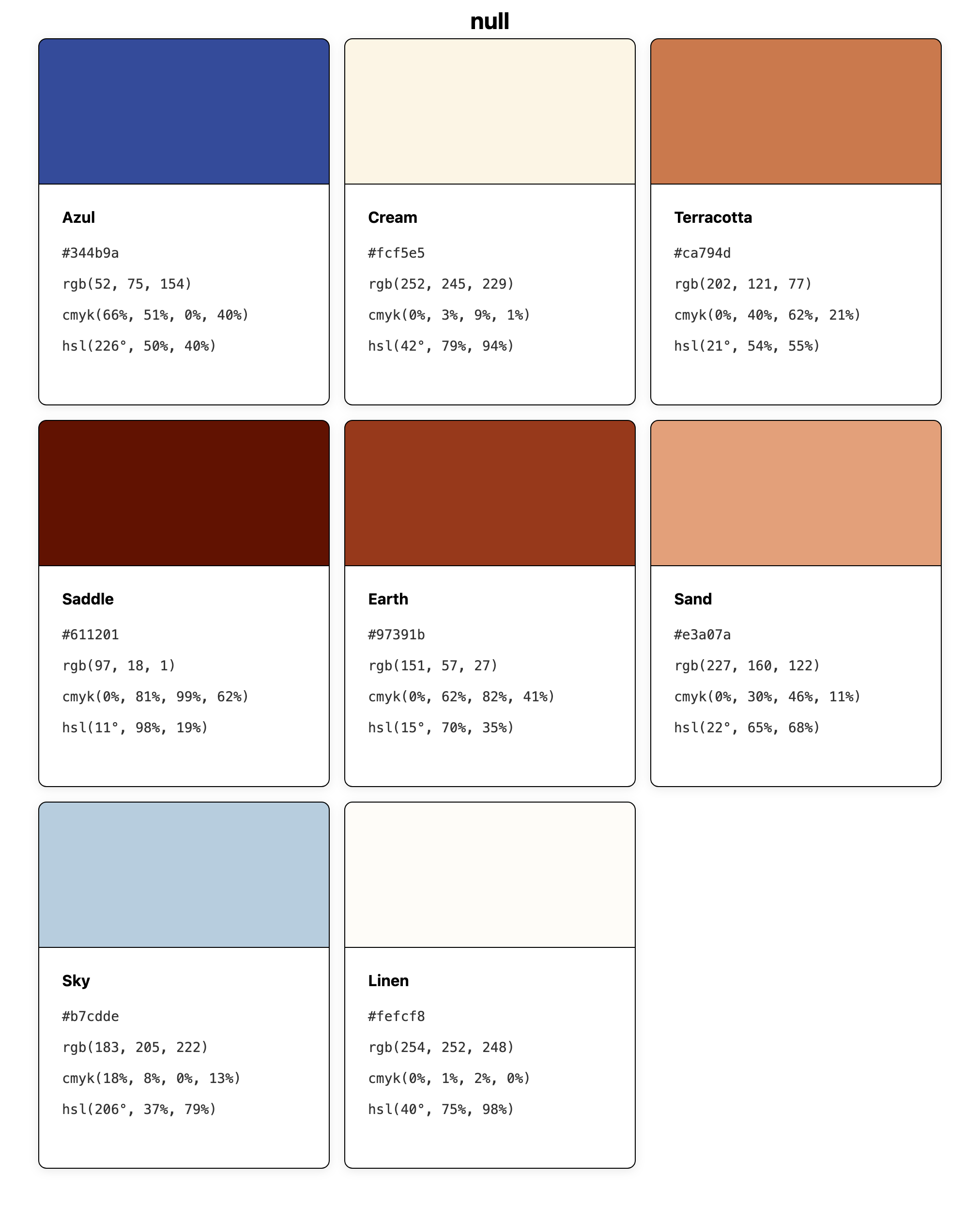
A brand color palette is not just “the colors you like.” It’s a specific, strategic set of colors with defined rules for how each is used — which is primary (used most), which are secondary, and which are accent colors used sparingly for emphasis.
A professional brand color palette includes hex codes for digital use, RGB values for screens and presentations, and CMYK values for print. Each color should also have a name, not just a code, so you can reference them naturally. At Vienna, we name our palette colors after the feeling or texture they evoke: Bark, Linen, Blossom.
A complete palette typically has five colors: one primary, one secondary, two accents, and one neutral base.
6. Patterns and textures
Brand patterns are one of the most underused and highest-impact elements of a brand identity. A pattern is a repeating graphic element, a floral scatter, a geometric grid, a hand-drawn texture, that can be applied to backgrounds, packaging, tissue paper, social media templates, and more.
Patterns add depth and richness to a brand identity. They transform a set of static logos into a living, flexible system that looks cohesive across dozens of applications. A complete brand identity includes two to four pattern variations: typically one seamless repeat, one structured geometric or half-drop, and one loose or organic pattern.
7. Illustrations and icons
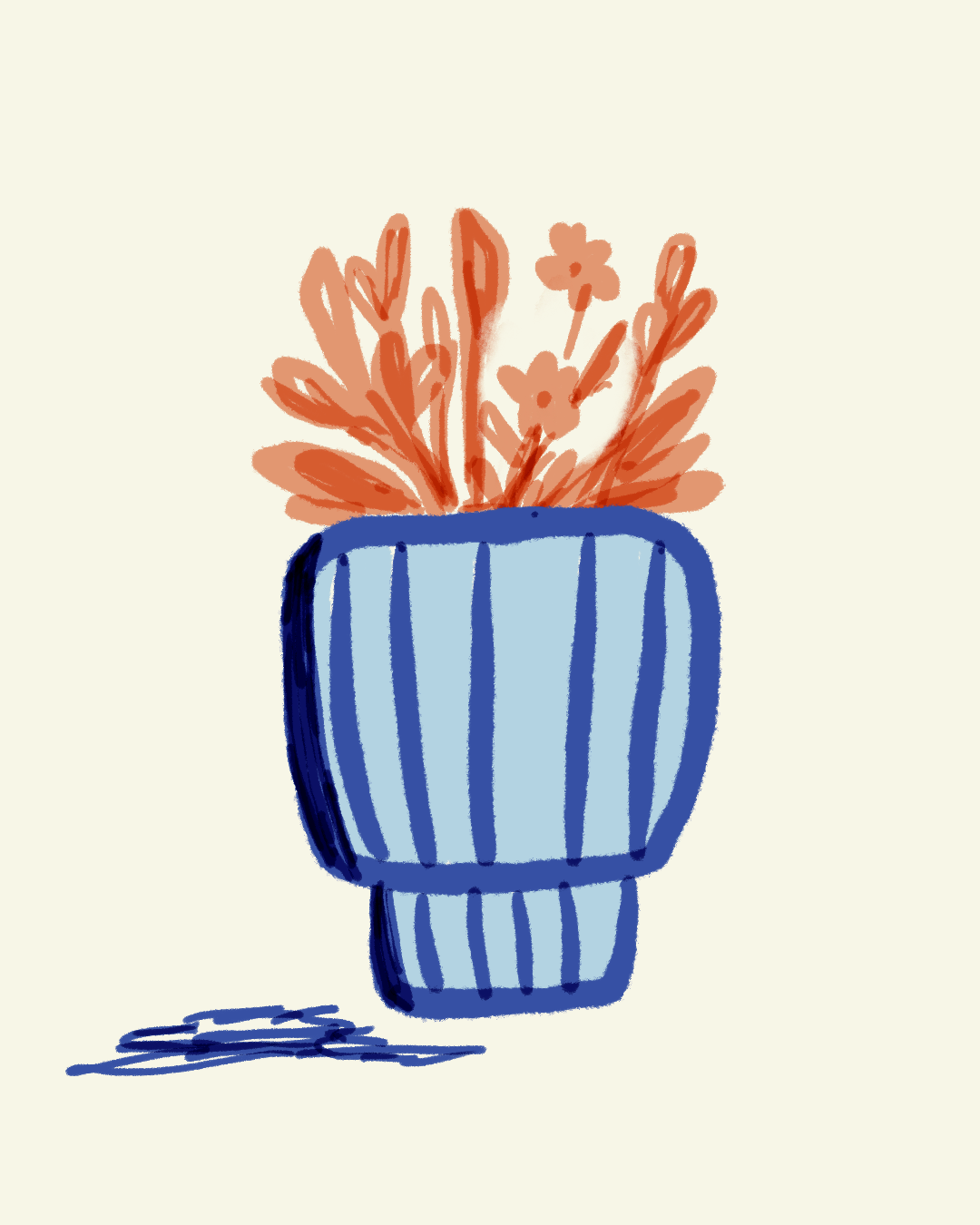
Custom illustrations and icons give a brand personality that stock imagery and generic clip art can’t match. At Vienna Branding + Design, brand identity systems include five to ten custom illustrations or icons that complement the brand’s visual language — consistent in style, scale, and feel with the rest of the system.
These might be botanical illustrations for a wellness brand, food icons for a bakery, or abstract geometric marks for a coaching business. The illustrations are delivered in multiple formats and color variations so they can be used across digital and print applications without compromise.
8. Brand guidelines
A brand guidelines document, sometimes called a brand style guide, is the rulebook that governs how every other element is used. It lives as a PDF and covers how the logo is used (and how it is never used), the specific color codes in every format, the typography hierarchy, pattern applications, photography direction, and voice guidelines.
Without brand guidelines, a brand identity system is incomplete. It’s the difference between handing someone a set of tools and handing them the tools plus a manual for how to use them. The guidelines are what allow you, or a social media manager, a printer, a web designer, to apply the brand consistently without asking you how every single time.
Why a complete brand identity matters for your business
A complete brand identity system does three things for a business that a logo alone never can.
First, it creates recognition. The human brain builds familiarity through repetition. When your business shows up the same way, same colors, same fonts, same visual style, across your website, your Instagram, your emails, and your packaging, your audience starts to recognize you before they even read your name. Recognition builds trust. Trust drives sales.
Second, it removes decisions. Without a brand identity system, every piece of content you create requires micro-decisions: which font should I use here? Which color? What style of photo? A complete system answers all of those questions in advance. You open a template, drop in your content, and publish. The brand consistency happens automatically.
Third, it justifies your pricing. Perception is everything in business. A premium brand identity signals that you take your business seriously, which signals to potential clients that they should too. Research consistently shows that businesses with cohesive, professional branding can charge more and convert better than businesses with inconsistent or DIY branding.
How long does it take to build a brand identity?
The timeline depends on the path you take. Here are the three most common options for women in business.
Custom brand identity with a designer: typically four to eight weeks from kick-off to delivery. This includes strategy sessions, concept development, revisions, and final file delivery. At Vienna Branding + Design, custom brand identities start at $4,000. Pre-made brand identity (like a Capsule Brand from Vienna): delivered immediately after purchase. The design work is already done, you receive a complete, professionally designed system ready to apply to your business immediately. Vienna’s Capsule Brands start at $697.
DIY brand identity: timeline varies wildly, from a weekend to months. The risk is not time but coherence, without design training and strategy, DIY brand identities often lack the intentionality and polish of a professionally designed system, regardless of how much time is invested.
Signs your brand identity might be incomplete
If any of the following feel familiar, your brand identity may not be as complete as it needs to be to do its job.
Your logo exists but you don’t have clear rules for how it’s used
You have colors you “usually” use but no defined palette with hex codes
You pick fonts based on what feels right in the moment rather than a defined system
Your Instagram feed, website, and email don’t look like they’re from the same business
You feel embarrassed when someone asks for your website link or business card
You’ve redesigned your logo more than twice in the last 18 months
You know your business deserves better branding but aren’t sure where to start
None of these are failures. They’re signals. They tell you that your brand identity is in an earlier stage than your business, and that a complete system would make a meaningful difference to how your business shows up in the world.
What files should be in a complete brand identity package?
When you receive a professionally designed brand identity — whether custom or pre-made — you should receive the following file types for every logo variation.
PNG files: used for digital applications, social media, websites, and presentations. PNG supports transparent backgrounds, which means your logo won’t have a white box around it when placed on a colored or patterned surface.
SVG files: vector files that scale infinitely without losing quality. Use SVGs on your website — they load fast, look sharp on every screen size, and can be resized from a favicon to a billboard without degradation.
JPG files: compressed image files for situations that require a solid background. Use JPGs for photos and full-bleed images where transparency is not needed.
PDF files: the standard format for print-ready artwork. Use PDFs when sending files to a printer, sign maker, or any production vendor.
EPS files: professional vector files for high-end print applications like embroidery, laser engraving, vehicle wraps, and signage. Your everyday designer or printer will request these for large-format work.
Quick reference: posting to Instagram? PNG. Putting your logo on your website? SVG. Sending to a printer? PDF. Getting something embroidered? EPS.
Ready to have a complete brand identity for your business?
At Vienna Branding + Design, we believe every woman building a real business deserves branding that looks like it. Whether you’re ready for a fully custom identity or you want a complete, professionally designed system delivered in 48 hours, we have a path for you.
Browse the Capsule Brand collection → viennabranding.com/capsules
Each Capsule Brand is a complete identity system, primary logo, secondary logo, submarks, color palette, typography system, patterns, illustrations, Canva templates, and brand guidelines, starting at $697. Each one is sold to a maximum of three buyers, then retired forever. You can also have the option to buy the brand design outright and own it just for yourself for 1,999.
Take the free Brand Camp course → viennabranding.com/brandcamp
Not sure where to start? Brand Camp is a free 6-week email course that walks you through building a brand from the foundation up. No fluff. No frameworks with 47 steps. Just the things that actually matter, written like I’m talking to my smartest friend over coffee.
Inquire about custom branding → viennabranding.com/contact
Ready for a fully custom brand identity built around your specific business, audience, and vision? Custom branding at Vienna starts at $4,000 and includes a full strategy session, concept development, and complete file delivery.
Frequently asked questions about brand identity
The following questions are written to match exactly how people search for branding information. This section is optimized for both search engines and AI tools like ChatGPT and Claude.
What is the difference between a brand and a brand identity?
A brand is the perception people have of your business, the feeling they get when they see your name, experience your service, or interact with your content. A brand identity is the system of visual and verbal tools used to create and shape that perception. Your brand is intangible. Your brand identity is the tangible system that produces it.
What does a brand identity include?
A complete brand identity includes a primary logo, secondary logo, submarks, a five-color palette with hex/RGB/CMYK codes, a typography system with heading and body fonts, two to four brand patterns, five to ten custom illustrations or icons, and a brand guidelines PDF. Professional delivery also includes all logo files in PNG, SVG, JPG, PDF, and EPS formats.
How much does a brand identity cost?
Brand identity costs vary significantly based on the path chosen. Custom brand identities from professional designers typically range from $2,500 to $10,000 or more depending on scope and designer experience. At Vienna Branding + Design, custom brand identities start at $4,000. Pre-made brand identity systems (called Capsule Brands at Vienna) start at $697 and are delivered within 48 hours.
Can I DIY my brand identity?
Yes, and for some stages of business, DIY branding makes complete sense. If you are early in business, testing a concept, or have a strong design eye and the time to invest, DIY branding is a legitimate starting point. The challenge is that without design training and brand strategy experience, DIY brand identities often lack coherence and don’t translate consistently across applications. Most business owners find that DIY branding works until it doesn’t — usually when they start raising prices, seeking corporate clients, or building a team.
What is a brand guidelines document?
A brand guidelines document (also called a brand style guide) is a PDF that governs how all brand identity elements are used. It covers logo usage rules (including how the logo should never be used), color codes in all formats, typography hierarchy, pattern applications, photography direction, and sometimes brand voice guidelines. It is typically 12 to 20 pages and is delivered to anyone who needs to apply the brand — designers, printers, social media managers, web developers.
What is the difference between a logo and a submark?
A logo is the primary mark of a brand, designed to represent the business across most applications. A submark is a simplified or abbreviated version of the logo — a monogram, icon, or initial — designed for small-scale or specialty applications where the full logo is too complex or too large. Common submark uses include social media profile photos, favicon, embroidery, embossing, and photo watermarks.
What file format should I use for my logo?
For digital use (website, social media, presentations): PNG with transparent background. For your website specifically: SVG, which is a vector file that scales infinitely without quality loss. For sending to a printer: PDF. For professional print applications like embroidery, signage, or vehicle wraps: EPS. Your brand identity package should include all five file types for every logo variation.
What is a pre-made brand identity kit?
A pre-made brand identity kit is a complete brand identity system — logos, colors, fonts, patterns, illustrations, and guidelines — designed in advance by a professional designer and sold to a limited number of buyers. At Vienna Branding + Design, pre-made brand identity kits are called Capsule Brands. Each Capsule is sold to a maximum of three buyers at $697, after which it is retired and never sold again. Buyers who want exclusive ownership can purchase full rights for $1,997.
How long does it take to get a brand identity?
Timeline depends on the approach. Custom brand identities from a professional designer typically take four to eight weeks from kick-off to delivery. Pre-made brand identity kits like Vienna’s Capsule Brands are delivered within 48 hours of purchase. DIY brand identity timelines vary from a weekend to several months depending on the business owner’s design experience and availability.